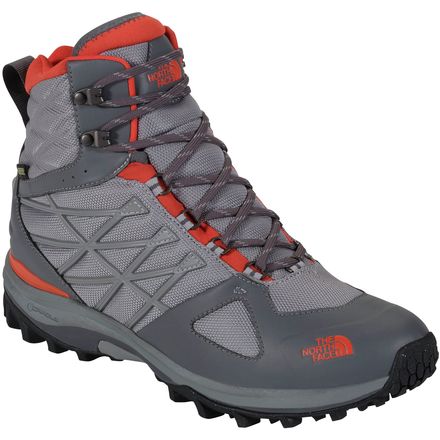
Finding the right boot for winter activities can be a real challenge sometimes. You obviously want something warm and comfortable that can provide good traction on snow and ice, but all too many times that comes at the expense of weight and bulk. That isn't the case with the new Ultra Extreme II GTX boots from The North Face however, as this is footwear designed for the cold and snowy season that doesn't have to make compromises for the sake of performance.
One thing is for certain, these boots definitely know how to make a first impression. Taking them out of the box for the first time, I was struck with just how lightweight they are, but was a little dubious about how well they would perform as a result. The boots look great too, and feature TNF's signature high quality build construction.
Last week I took these boots with me to Utah for a little pre-Outdoor Retailer adventure in the mountains near Park City. With plenty of snow on the ground I figured that would make a great test for this lightweight winter boot. I discovered that they performed better than I expected in most areas, particularly when taking part in winter activities such as snowshoeing and fat bike riding.
The boots feature a Gore-Tex liner that provides not only warmth and insulation, but a layer of waterproofing as well. My winter camping trip began with an evening of outdoor cooking and dinner shared with other writers and media folks, which ended up with most of staying out in the cold for more than four hours. Throughout that time, my feet stayed warm and dry, although by the time we were ready to call it quits for the night, my toes were starting to get a little frosty. But that is to be someone expected when you're standing around in cold weather conditions for extended periods of time. The next day when I set out on the trail for some snowshoeing, my feed remained plenty warm throughout the hike. Better yet, they also stayed dry, despite the fact the snow was quite deep.
Because these boots are so lightweight, they are also incredibly comfortable to wear, even on active excursions. Prior to setting out for Utah, I had only taken them out of the box and worn them around the house for a bit, but that was enough to tell me they wouldn't take long to break in. That turned out to be true, as after only wearing them for an hour or two, they were pretty much ready to go once I reached my destination. By the time I strapped on my snowshoes they already felt completely natural on my feet.
To give the Ultra Extreme II GTX boots plenty of grip on a variety of surfaces, The North Face uses a Vibram Icetrek outsole. This helps the shoes to stay stable in a variety of conditions, ranging from completely dry, to soaking wet, to frozen solid. Hiking in these boots on snow and ice, even without snowshoes, was a breeze, and I never once felt like they weren't up to the task. If anything, the grippy nature of the soles provided more confidence when tackling those conditions.
One of the the things that I like most about these boots is that they don't actually feel like you're wearing boots. The fit and comfort levels are more akin to an athletic shoe, albeit one with lots of ankle support. In fact, the UE II GTX's felt so good on my feet that I didn't bother to take them off for hours after we had left our snowy campground. Because they felt so great on my feet, and provided a nice level of warmth, there was simply no need, even after I had returned to Salt Lake City for the start of the convention.
If you're in the market for a lightweight hiking boot for active winter sports, these boots are more than up to the task, and with a price tag of $150, they are also quite a bargain in my opinion. Winter boots aren't cheap, and a good pair will generally set you back more than what The North Face is asking here. But as comfortable as these are on your feet, and as lightweight as they are in your pack, it is easy to recommend them for anyone who enjoys winter outdoor activities.
That said however, the Ultra Extreme II GTX is probably a bit too lightweight for extremely cold conditions. I used them in temperatures hovering around 20ºF (-6ºC) and had absolutely no problems, particularly when I was on the move. But if the temperatures dropped below 10ºF (-12ºC) I would have definitely wanted warmer socks at the bare minimum, and possibly warmer boots all around. Aside from that however, they performed exceptionally well, and I found myself truly falling in love with them. This is a great boot not just for winter sports, but cooler weather hikes as well, and I have a feeling I'll be getting a lot of use out of them in the weeks to come.
Winter etiketine sahip kayıtlar gösteriliyor. Tüm kayıtları göster
12 Ocak 2016 Salı
11 Ocak 2016 Pazartesi
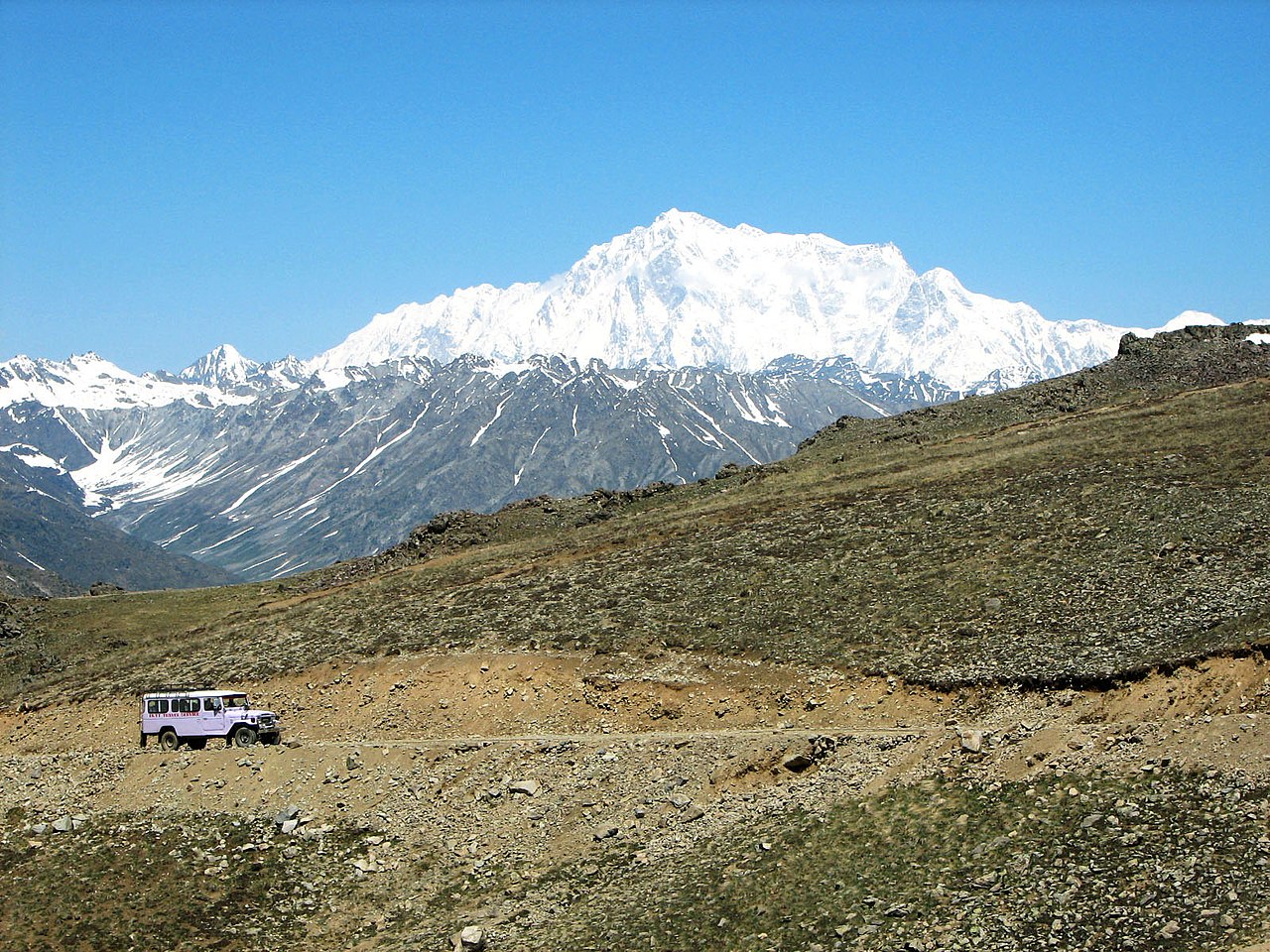
Winter Climbs 2016: Two Teams Join Forces on Nanga Parbat
The teams climbing on Nanga Parbat have made solid progress since we last checked in. They've all had opportunities to work their respective routes, and everyone is acclimatizing as expected. There is still a long way to go before they launch any perspective summit bids, but with a period of good weather on the mountain, things are progressing about as well as can be expected at this point of the season.
The Polish Justice for All team is working the Rupal route. They're currently above 6200 meters (20,341 ft) and are fixing ropes towards Camp 3. So far, they've been making steady progress, although it hasn't been as fast as they'd like. Still, the team is slowly, and methodically, working its way up the mountain, acclimatizing as they go, and installing camps where they'll need them for any potential summit pushes down the line.
One interesting note however is that this squad originally had several Pakistani members as well, but according to ExWeb, they left the team a few weeks back. It is unclear why the local climbers decided to depart, but there seems to have been some dispute over the best way to climb the moutanin together.
Elsewhere, two of the teams on the Kinshofer Route have decided to join forces. One squad was originally made up of Alex Txikon, Daniele Nardi, and Ali Sadpara, while the other included the duo of Adam Bielecki and Jacek Czech. Each of these climbers is extremely strong and experienced, but it was in their best interest to work together to try to make the first ascent of Nanga Parbat in the winter. They have managed to fix rope to 5700 meters (18,700 ft), with another 3000 meters of rope shuttled to various points on the mountain. That should be more than enough to get them to the top, although there is lots of hard work to be done getting all of it into position.
With these two squads now working together, the rope fixing should go more quickly and efficiently. And since there are so many strong climbers on the team, the chances of success for all of them has increased all around.
ExWeb is reporting that Tomek Mackiewicz and Elisabeth Revol have now reached Camp 3 at approximately 6600 meters (21,653 ft), and were expecting to go above 7000 meters (22,956 ft) later today. That will put them in good position for a potential summit push, although they'll likely retreat to BC to rest up before that will ever happen. The two climbers were reportedly sharing camps with Simone Moro and Tamara Lunger as well, although the Italian climbers have not posted an update on their progress since last week.
All in all, it has been a good start to the winter climbing season on Nanga. It is still too early to know if anyone will be successful in their attempt o climb the mountain however, as the winter weather conditions can shift quickly, with heavy snows, high winds, and extreme temperatures gripping the region for days. Still, the teams remain optimistic that they can finally climb this beast during the harshest season of the year. We'll just have to wait to see if they get the chance.
The Polish Justice for All team is working the Rupal route. They're currently above 6200 meters (20,341 ft) and are fixing ropes towards Camp 3. So far, they've been making steady progress, although it hasn't been as fast as they'd like. Still, the team is slowly, and methodically, working its way up the mountain, acclimatizing as they go, and installing camps where they'll need them for any potential summit pushes down the line.
One interesting note however is that this squad originally had several Pakistani members as well, but according to ExWeb, they left the team a few weeks back. It is unclear why the local climbers decided to depart, but there seems to have been some dispute over the best way to climb the moutanin together.
Elsewhere, two of the teams on the Kinshofer Route have decided to join forces. One squad was originally made up of Alex Txikon, Daniele Nardi, and Ali Sadpara, while the other included the duo of Adam Bielecki and Jacek Czech. Each of these climbers is extremely strong and experienced, but it was in their best interest to work together to try to make the first ascent of Nanga Parbat in the winter. They have managed to fix rope to 5700 meters (18,700 ft), with another 3000 meters of rope shuttled to various points on the mountain. That should be more than enough to get them to the top, although there is lots of hard work to be done getting all of it into position.
With these two squads now working together, the rope fixing should go more quickly and efficiently. And since there are so many strong climbers on the team, the chances of success for all of them has increased all around.
ExWeb is reporting that Tomek Mackiewicz and Elisabeth Revol have now reached Camp 3 at approximately 6600 meters (21,653 ft), and were expecting to go above 7000 meters (22,956 ft) later today. That will put them in good position for a potential summit push, although they'll likely retreat to BC to rest up before that will ever happen. The two climbers were reportedly sharing camps with Simone Moro and Tamara Lunger as well, although the Italian climbers have not posted an update on their progress since last week.
All in all, it has been a good start to the winter climbing season on Nanga. It is still too early to know if anyone will be successful in their attempt o climb the mountain however, as the winter weather conditions can shift quickly, with heavy snows, high winds, and extreme temperatures gripping the region for days. Still, the teams remain optimistic that they can finally climb this beast during the harshest season of the year. We'll just have to wait to see if they get the chance.
Etiketler:
Mountaineering,
Nanga Parbat,
Pakistan,
Simone Moro,
Winter
2016 Winter Outdoor Retailer Round-Up
This weekend I returned home from the 2016 Outdoor Retailer convention, where hundreds of companies were showing off their latest gear designed to make our lives a lot easier on our adventures. As the name implies, this version of the show is heavily focused on winter activities, such as skiing, snowboarding, and snowshoeing. As a result, much of what was on display is designed to help keep us warm in the cold temperatures, while enjoying our favorite winter sports.
For those who couldn't attend the show, I thought I'd share some of the gear round-ups that have been posted around the web, starting with the ones that I personally wrote over at the Gear Institute. Not only did we publish three show previews (read part 1, part 2, and part 3), we also shared our selections for the best new gear that was on display at the show. Those items were chosen because they brought something, new, unique, and exciting to the gear market.
But we weren't the only ones combing the halls of the Salt Palace in Salt Lake City checking out the new products. The Gear Junkie also posted their picks for the best gear they saw there too, as did Outside magazine, and even Popular Mechanics got in on the act, although I haven't seen their awards selection posted just yet. (Update: Here's the link to the Popular Mechanics awards)
Most of the gear that was shown at OR won't arrive on store shelves until next fall and winter. In some cases the products are still being developed, and they won't be ready to go for a several months. But that means you'll have plenty of time to save your pennies, because a lot of the really great pieces of gear won't come cheap. Still, there are some truly amazing things in the works as our gear continues to get more sophisticated and technical. It is certainly a great time to be an outdoor enthusiasts, as it is now easier than ever to be comfortable and warm, even in harsh environments.
For those who couldn't attend the show, I thought I'd share some of the gear round-ups that have been posted around the web, starting with the ones that I personally wrote over at the Gear Institute. Not only did we publish three show previews (read part 1, part 2, and part 3), we also shared our selections for the best new gear that was on display at the show. Those items were chosen because they brought something, new, unique, and exciting to the gear market.
But we weren't the only ones combing the halls of the Salt Palace in Salt Lake City checking out the new products. The Gear Junkie also posted their picks for the best gear they saw there too, as did Outside magazine, and even Popular Mechanics got in on the act, although I haven't seen their awards selection posted just yet. (Update: Here's the link to the Popular Mechanics awards)
Most of the gear that was shown at OR won't arrive on store shelves until next fall and winter. In some cases the products are still being developed, and they won't be ready to go for a several months. But that means you'll have plenty of time to save your pennies, because a lot of the really great pieces of gear won't come cheap. Still, there are some truly amazing things in the works as our gear continues to get more sophisticated and technical. It is certainly a great time to be an outdoor enthusiasts, as it is now easier than ever to be comfortable and warm, even in harsh environments.
21 Aralık 2015 Pazartesi
Winter Climbs 2016: Work Begins on Nanga Parbat
Winter has now officially arrived here in the northern hemisphere, and that means it is time for the very tough and challenging winter climbing season to begin as well. This year, the focus will be placed squarely on Nanga Parbat, the 8126 meter (26,660 ft) mountain located in Pakistan that is one of just two eight-thousand meter peaks that have yet to be climbed in winter. The other is K2 of course, which won't see any teams on its slopes this year. But as I write this, at least five teams are either on Nanga or will be arriving soon, with the race to be the first to top out starting today.
The first team to arrive was the Polish Justice For All squad. They've been on the mountain for nearly a week already, and have been busy setting up Base Camp, organizing their gear, and acclimatizing on some treks throughout the region. But now that winter is officially here, they'll begin the arduous task of shuttling equipment up the slopes as they start to build the series of camps that could eventually grant them access to the summit.
This team has been on the mountain before, and the Poles have a rich history of winter ascents. As usual, they have come well prepared for the challenges ahead, and have already stated that they are ready to stay in place all season long if it means they can finally climb Nanga Parbat. We'll see if it actually comes to that.
Simone Moro and Tamara Lunger should also be on the mountain by now, although it is unclear exactly where they are located at the moment. They've been in Pakistan for several weeks now, and arrived in Skardu on December 9, which should have put them in position to reach Nanga ahead of the start of winter. Simone also has quite a history with winter climbing, although he and Lunger were forced to cancel their expedition last year. They're hoping for more success this time out however, and as a result they have arrived in country a bit earlier. Unlike the Polish squad though, they will be attempting to climb in a lighter fashion, as it is just the two of them working the route.
Meanwhile, Alex Txikon and Daniele Nardi have wrapped up their acclimation efforts in the Argentinean Andes, and are now preparing to leave South America for Pakistan. Last week they summited several 6000 meter peaks, including Incahuasi, a 6638 meter (21,778 ft) mountain that was once scared to the Incas. Those climbs have helped get them ready for Nanga Parbat, although it could be the early days of 2016 before they actually get to their intended target.
Similarly, Adam Bielecki has been acclimatizing in Chile as well before he departs for Pakistan. He summited Ojos del Salado (6893 meters/22,615 ft) on Saturday, and prior to that spent three nights above 6700 meters (21,981 ft) to let his body adapt to the altitude. He has likely descended now and is preparing to leave South America as well.
With the winter climbing season now underway, we'll be keeping a close eye on the proceedings on Nanga Parbat. The various teams that are already on the mountain will launch their efforts to climb the peak over the next day or two, while the others will focus on getting to Base Camp. It should be an interesting year on this massive peak, and although there is a long season ahead, I have a good feeling that we might just the first winter ascent early next year.
The first team to arrive was the Polish Justice For All squad. They've been on the mountain for nearly a week already, and have been busy setting up Base Camp, organizing their gear, and acclimatizing on some treks throughout the region. But now that winter is officially here, they'll begin the arduous task of shuttling equipment up the slopes as they start to build the series of camps that could eventually grant them access to the summit.
This team has been on the mountain before, and the Poles have a rich history of winter ascents. As usual, they have come well prepared for the challenges ahead, and have already stated that they are ready to stay in place all season long if it means they can finally climb Nanga Parbat. We'll see if it actually comes to that.
Simone Moro and Tamara Lunger should also be on the mountain by now, although it is unclear exactly where they are located at the moment. They've been in Pakistan for several weeks now, and arrived in Skardu on December 9, which should have put them in position to reach Nanga ahead of the start of winter. Simone also has quite a history with winter climbing, although he and Lunger were forced to cancel their expedition last year. They're hoping for more success this time out however, and as a result they have arrived in country a bit earlier. Unlike the Polish squad though, they will be attempting to climb in a lighter fashion, as it is just the two of them working the route.
Meanwhile, Alex Txikon and Daniele Nardi have wrapped up their acclimation efforts in the Argentinean Andes, and are now preparing to leave South America for Pakistan. Last week they summited several 6000 meter peaks, including Incahuasi, a 6638 meter (21,778 ft) mountain that was once scared to the Incas. Those climbs have helped get them ready for Nanga Parbat, although it could be the early days of 2016 before they actually get to their intended target.
Similarly, Adam Bielecki has been acclimatizing in Chile as well before he departs for Pakistan. He summited Ojos del Salado (6893 meters/22,615 ft) on Saturday, and prior to that spent three nights above 6700 meters (21,981 ft) to let his body adapt to the altitude. He has likely descended now and is preparing to leave South America as well.
With the winter climbing season now underway, we'll be keeping a close eye on the proceedings on Nanga Parbat. The various teams that are already on the mountain will launch their efforts to climb the peak over the next day or two, while the others will focus on getting to Base Camp. It should be an interesting year on this massive peak, and although there is a long season ahead, I have a good feeling that we might just the first winter ascent early next year.
Etiketler:
Himalaya,
Karakoram,
Mountaineering,
Nanga Parbat,
Pakistan,
Winter
18 Aralık 2015 Cuma
Video: Yellowstone in Winter
It's no secret that Yellowstone National Park is one of my favorite places on Earth. With its unique geothermal formations, wonderful wildlife, and enchanting landscapes, it is a place that every outdoor adventurer should visit at least once. But as great as it is during the summer, it is even more amazing in the winter, when the place is nearly empty, and blanket of fresh snow covers everything. To get a sense of what that is like, check out this video which takes us around the park to examine some of the sights during the cold, snowy winter months. Simply beautiful.
Etiketler:
National Geographic,
Video,
Winter,
Yellowstone
16 Aralık 2015 Çarşamba
30 Fantastic Things To Do In Winter
We're now less than a week away from the official start of winter, and for many people that means shutting down their outdoor adventures until the arrival of spring. But for those of us who don't see a little cold weather and snow as a barrier to being outside, it is just another time of year to pursue our passions. To help us in that area, Outside magazine has compiled a list of the 30 best things to do in winter, giving us a bucket list for the season ahead.
Most of Outside's suggestions are approachable, even if they seem like something that would be tough to accomplish. For instance, they start the list by recommending we all go skiing with Chris Davenport, one of the most accomplished ski-mountaineers ever. At first glance, you're apt to ask yourself how that would ever be possible, but it turns out Davenport is going to be guiding on Aspen Mountain in March, and if you have enough cash you can join him.
Other suggestions are a bit more reasonable. For instance, they offer suggestions on where you can drive a snowcat or go fat tire biking. There are also options for soaking in a hot spring, going heli-skiing on a budget, and climbing and skiing a volcano. In short, there are so many possibilities on the list that you'll likely need ten winters to accomplish them all.
I like this list because it eliminates the excuses that many people make for not enjoying the winter season. Sure, its cold and windy, but that's also part of the fun. With the right gear however, you can spend all day outdoors and still be very comfortable. Besides, as an avid lover of the outdoors, why would you ever want to spend an entire season avoiding the elements, when you could be embracing them for an even more fulfilling experience. Winter is nearly here. Enjoy it to the fullest!
Most of Outside's suggestions are approachable, even if they seem like something that would be tough to accomplish. For instance, they start the list by recommending we all go skiing with Chris Davenport, one of the most accomplished ski-mountaineers ever. At first glance, you're apt to ask yourself how that would ever be possible, but it turns out Davenport is going to be guiding on Aspen Mountain in March, and if you have enough cash you can join him.
Other suggestions are a bit more reasonable. For instance, they offer suggestions on where you can drive a snowcat or go fat tire biking. There are also options for soaking in a hot spring, going heli-skiing on a budget, and climbing and skiing a volcano. In short, there are so many possibilities on the list that you'll likely need ten winters to accomplish them all.
I like this list because it eliminates the excuses that many people make for not enjoying the winter season. Sure, its cold and windy, but that's also part of the fun. With the right gear however, you can spend all day outdoors and still be very comfortable. Besides, as an avid lover of the outdoors, why would you ever want to spend an entire season avoiding the elements, when you could be embracing them for an even more fulfilling experience. Winter is nearly here. Enjoy it to the fullest!
14 Aralık 2015 Pazartesi
Video: Frozen Highway Trailer - Mountain Biking Through the Himalaya
Earlier this year, two Indian adventures – Rajesh P Nayak and Sharath Vishnu – attempted a winter crossing by mountain bike through the Himalaya. The two men decided to ride their bikes along the frozen Zanskar river through the highest motorable passes of Khardung La and Chang La in the Ladakh region, covering some 600 km (372 miles) in the process. A documentary team came along with them to capture their efforts, and that footage is now being turned into a film called Frozen Highway. The video below is a trailer for that film, and gives us a brief glimpse of what it was like for Rajesh and Sharath out on the trail. To say it was a challenge would be an understatement, as you'll see below.
Etiketler:
Documentary,
Himalaya,
India,
Mountain Biking,
Video,
Winter
8 Aralık 2015 Salı
Gear Closet: Jöttnar Fenrir Hydrophobic Down Jacket
One of my favorite advances in the area of outdoor gear over the past few years has been the introduction of water-resistant down. Before the creation of this type of insulation, anytime a down jacket or sleeping bag got wet, it became practically useless. Wet down loses its loft, becomes clumpy, and can even freeze solid. But with this new type of down insulation that isn't the case, and an increasing number of companies are incorporating it into their products, improving the overall performance in the process. Case in point, the Fenrir jacket from Jöttnar, which uses Downtek insulation to create a warm, lightweight outer layer that is built for alpine pursuits.
If you're not familiar with Jöttnar just yet, it is probably because the U.K.-based company is still relatively new on the scene, and hasn't made a big impact on this side of the pond just yet. But they're hoping to change that in the near future, and considering the line-up of outdoor performance gear that they offer, I think you'll probably be hearing a lot more from them in the future.
The Fenrir is one of the company's flagship down jackets, and is a good example of their approach to design gear for use in extreme conditions. Lightweight and highly packable, the jacket weighs a mere 13.2 ounces (380 g), but offers a level of performance that you might find in a heavier, bulkier product. Stuffed with 850 fill power down, Jöttnar has placed its water-repellant insulation in strategic areas throughout the jacket to help make it as efficient and comfortable as possible. As a result, the Fenrir has been designed to provide protection where it is needed most, without becoming overly bulky.
In fact, one of the things that I like the most about this jacket is its athletic cut and design. This is a precut that has been designed with outdoor athletes in mind, and as a result it hugs the body closely, providing a fit that doesn't impede movement in any way, but also ensures that the warmth is kept inside, close to the body where it will do the most good.
The outer fabrics of the Fenrir include rip-stop nylon that has been designed to keep the howling winds at bay. Those same fabrics are also water resistant and treated with a DWR coating that will repel just about anything short of a serious downpour. That helps to keep the Downtek insulation inside the jacket from getting overly wet as well, even though it is capable of staying dry for up to 10 times longer than traditional down as well.
Other features that are much appreciated include an interior pocket large enough to hold a smartphone, two hand-warming pockets on either side of the jacket, and elastic cuffs that were specifically designed to help keep the heat in. Drawcords along the bottom of the Fenrir allow the wearer to dial in just the right fit, and those same cords have been engineered to avoid snagging them on external objects while on the move.
As someone who is a frequent traveler, one of my favorite features of this jacket is its ability to pack down to a very small footprint. Jöttnar even includes a stuff sack along with the Fenrir that allows you to store the jacket until it is needed, without taking up too much room in your backpack. This will come in handy on many future trips where a warm jacket is needed, but you won't want to sacrifice carrying capacity.
When used as part of a layering system – consisting of base layers, a mid-layer, and an outer shell – the Fenrir truly comes alive. This is a warm, comfortable, puffy jacket, without too much of the puffy part. The fact that it also features a classic, simple, but elegant, design makes it easy to wear around town on cold weather days without feeling like you're out of place. But the Fenrir was designed for performance in the mountains, and that is where it truly shines. The jacket will keep you warm on the trail in incredibly bad conditions, allowing you to keep moving without compromise. What more could we possibly ask for out of our gear?
Jöttnar sells the Fenrir for £200, which roughly translates to $300 at the current exchange rate. That's a relative bargain for a jacket that performs at this level, and offers so much versatility. The biggest challenge you're likely to have is tracking one down here in the States or in North America in general. Hopefully that will change soon, as this is certainly a brand to keep an eye on, and their gear is top notch in every way.
If you're not familiar with Jöttnar just yet, it is probably because the U.K.-based company is still relatively new on the scene, and hasn't made a big impact on this side of the pond just yet. But they're hoping to change that in the near future, and considering the line-up of outdoor performance gear that they offer, I think you'll probably be hearing a lot more from them in the future.
The Fenrir is one of the company's flagship down jackets, and is a good example of their approach to design gear for use in extreme conditions. Lightweight and highly packable, the jacket weighs a mere 13.2 ounces (380 g), but offers a level of performance that you might find in a heavier, bulkier product. Stuffed with 850 fill power down, Jöttnar has placed its water-repellant insulation in strategic areas throughout the jacket to help make it as efficient and comfortable as possible. As a result, the Fenrir has been designed to provide protection where it is needed most, without becoming overly bulky.
In fact, one of the things that I like the most about this jacket is its athletic cut and design. This is a precut that has been designed with outdoor athletes in mind, and as a result it hugs the body closely, providing a fit that doesn't impede movement in any way, but also ensures that the warmth is kept inside, close to the body where it will do the most good.
The outer fabrics of the Fenrir include rip-stop nylon that has been designed to keep the howling winds at bay. Those same fabrics are also water resistant and treated with a DWR coating that will repel just about anything short of a serious downpour. That helps to keep the Downtek insulation inside the jacket from getting overly wet as well, even though it is capable of staying dry for up to 10 times longer than traditional down as well.
Other features that are much appreciated include an interior pocket large enough to hold a smartphone, two hand-warming pockets on either side of the jacket, and elastic cuffs that were specifically designed to help keep the heat in. Drawcords along the bottom of the Fenrir allow the wearer to dial in just the right fit, and those same cords have been engineered to avoid snagging them on external objects while on the move.
As someone who is a frequent traveler, one of my favorite features of this jacket is its ability to pack down to a very small footprint. Jöttnar even includes a stuff sack along with the Fenrir that allows you to store the jacket until it is needed, without taking up too much room in your backpack. This will come in handy on many future trips where a warm jacket is needed, but you won't want to sacrifice carrying capacity.
When used as part of a layering system – consisting of base layers, a mid-layer, and an outer shell – the Fenrir truly comes alive. This is a warm, comfortable, puffy jacket, without too much of the puffy part. The fact that it also features a classic, simple, but elegant, design makes it easy to wear around town on cold weather days without feeling like you're out of place. But the Fenrir was designed for performance in the mountains, and that is where it truly shines. The jacket will keep you warm on the trail in incredibly bad conditions, allowing you to keep moving without compromise. What more could we possibly ask for out of our gear?
Jöttnar sells the Fenrir for £200, which roughly translates to $300 at the current exchange rate. That's a relative bargain for a jacket that performs at this level, and offers so much versatility. The biggest challenge you're likely to have is tracking one down here in the States or in North America in general. Hopefully that will change soon, as this is certainly a brand to keep an eye on, and their gear is top notch in every way.
Etiketler:
Backpacking,
Camping,
Gear,
Hiking,
Jacket,
Mountaineering,
Winter
7 Aralık 2015 Pazartesi
Winter Climbing 2016: Teams Prep For Nanga Parbat
The dust hasn't completely settled on the fall climbing season in the Himalaya, but teams are already looking ahead to the winter. While there are few expeditions that take place during the coldest, snowiest months of the year, as previously discussed there are at least five squads heading to Nanga Parbat in Pakistan to attempt the first ascent of that mountain during the winter season. To prepare for the challenges they'll face, several of those teams have already started their acclimatization process. ExWeb has a complete rundown of the situation.
The team being led by Alex Txikon has decided to acclimatize in the Andes of South America before flying to Pakistan. He'll be joined by Daniele Nardi, Ali Sadpara, and Janusz Golab. The team left for Argentina last Friday and plan to stay there until flying to Pakistan on December 22, the first full day of winter.
Polish climbers Adam Bielecki and Jacek Czech have flown to Chile where they'll also acclimatize in the Andes ahead of their winter attempt on Nanga. They'll first acclimatize on Ohos de Salado, a 6893 meter (22,614 ft) peak that will get them ready for a winter expedition to the Himalaya. The duo plan to climb NP in pure alpine style, without establishing camps or working a specific route.
Meanwhile, the joint Polish-Pakistani team that is attempting Nanga Parbat this winter has already started their acclimatization efforts on Rakaposhi. They've already reached an altitude of 4600 meters (15,091 ft) as they start to get their bodies ready for the conditions they'll face in the days to come. They'll be climbing the Schell Route on the Rupal Face, and hope to be on the mountain when winter officially begins.
Finally, Tomek Mackewicz and Elisabeth Revol will be back on Nanga Parbat this winter as well. They'll first acclimatize in the region before heading to Base Camp on the mountain in early January. The two climbers scouting a route last season, and even made a valiant attempt at the summit, but were forced to abandon their attempt. They'll use the intel they received on that expedition to help them this year too.
That's all for now. Expect to hear a lot more about these expeditions in the weeks ahead. We'll be watching their progress very closely.
The team being led by Alex Txikon has decided to acclimatize in the Andes of South America before flying to Pakistan. He'll be joined by Daniele Nardi, Ali Sadpara, and Janusz Golab. The team left for Argentina last Friday and plan to stay there until flying to Pakistan on December 22, the first full day of winter.
Polish climbers Adam Bielecki and Jacek Czech have flown to Chile where they'll also acclimatize in the Andes ahead of their winter attempt on Nanga. They'll first acclimatize on Ohos de Salado, a 6893 meter (22,614 ft) peak that will get them ready for a winter expedition to the Himalaya. The duo plan to climb NP in pure alpine style, without establishing camps or working a specific route.
Meanwhile, the joint Polish-Pakistani team that is attempting Nanga Parbat this winter has already started their acclimatization efforts on Rakaposhi. They've already reached an altitude of 4600 meters (15,091 ft) as they start to get their bodies ready for the conditions they'll face in the days to come. They'll be climbing the Schell Route on the Rupal Face, and hope to be on the mountain when winter officially begins.
Finally, Tomek Mackewicz and Elisabeth Revol will be back on Nanga Parbat this winter as well. They'll first acclimatize in the region before heading to Base Camp on the mountain in early January. The two climbers scouting a route last season, and even made a valiant attempt at the summit, but were forced to abandon their attempt. They'll use the intel they received on that expedition to help them this year too.
That's all for now. Expect to hear a lot more about these expeditions in the weeks ahead. We'll be watching their progress very closely.
Etiketler:
Himalaya,
Karakoram,
Mountaineering,
Nanga Parbat,
Pakistan,
Winter
Kaydol:
Yorumlar (Atom)