Himalaya etiketine sahip kayıtlar gösteriliyor. Tüm kayıtları göster

12 Ocak 2016 Salı

Win a Copy of Everest Courtesy of The Adventure Blog and Universal Home Entertainment

Next Tuesday, January 19, the Hollywood blockbuster Everest will release on DVD, and to celebrate The Adventure Blog is teaming up with Universal Home Entertainment to give away a DVD/Blu-Ray combo pack, as well as a limited edition Everest carabiner.

As you may recall, the film recounts the tragic events of the famous 1996 season, during which eight people died on the mountain. In the movie, some of the principal characters are played by famous actors, including Josh Brolin, Jason Clarke, and Jake Gyllenhaal. You can read my full review of the film here, which I lauded for being accurate in its depiction of the climb, and having great cinematography that highlight the scenery from the Himalaya incredibly well.

Everest is already available on digital streaming platforms such as iTunes and the Google Play Store, but next week it will ship on physical media to traditional outlets as well. The combo pack that I'm giving away includes the full film on DVD and Blu-Ray, as well a redemption code for a digital version as well. It also includes bonus footage on the making of the film, the training that the actors went through to prepare for their roles, and more.

If you'd like to win this copy of the film, you can enter the contest for the giveaway simply by sending an email with subject line of "Everest" to kungfujedi@gmail.com. The contest is open to U.S. residents only, and will run through Monday, January 19. At which time, I will randomly draw a winner, and contact them for a shipping address to send the prize to. One entry per person please.

Good luck!

4 Ocak 2016 Pazartesi

Winter Climbs 2016: Teams Go To Work on Nanga Parbat

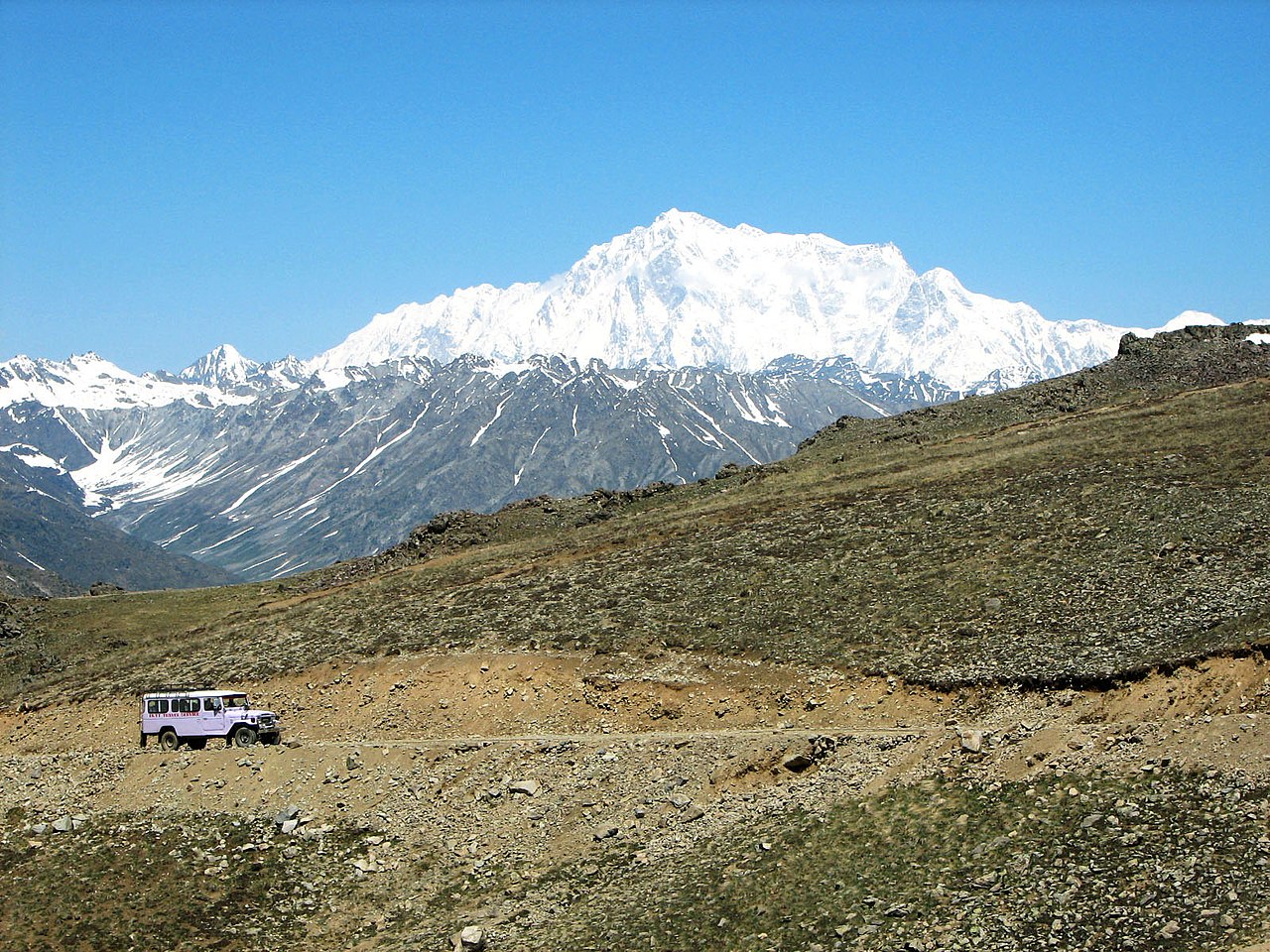
It has been a couple of weeks since we posted any updates from Pakistan, where at least five teams are now preparing to attempt the first ascent of Nanga Parbat in winter. As I'm sure most of you know, Nanga is one of just two 8000-meter peaks that have yet to be climbed during the very difficult winter season. The other major peak that holds that distinction is K2, which will have no visitors this winter at all. But over the past few years, there has been progress made on Nanga Parbat, and this year just might be the one that sees a successful summit at long last.

The first team on the mountain this year was the Polish Justice For All squad. They actually arrived in the region as far back as the middle of November, and have been busy acclimatizing ahead of the start of the winter season. Once the first day of winter in the Northern Hemisphere passed on December 21, they immediately went to work and have been busy fixing ropes and establishing camps ever since. They have now reached an altitude of about 5500 meters (18,044 ft) and have been shuttling gear up to their intermediate camps before heading higher on the Schell Route.

Elsewhere, Adam Bielecki and Jacek Czech have arrived in Base Camp on Nanga Parbat after spending several weeks acclimatizing in the Andes in South America. Adam says that the snow is already quite heavy on the mountain, but the pair have managed to establish Camp 1 at 4900 meters (16,076 ft). They have since returned to Base Camp where they are catching their breath, warming up, and planning the next move.


The international team led by Alex Txikon, and consisting of Daniele Nardi and Ali Sadpara arrived on the mountain a few days back and have already gone to work too. They've already taken 70 kilograms (154 lbs) up to C1, which is located at 4850 meters (15,912 ft) using snowshoes and sleds to aid in the process. So far, the team reports that the weather has been good, but that is expected to change in the next few days, when heavy snow is in the forecast.

Italian climbers Simone Moro and Tamara Lunger reached Nanga Parbat on December 27, and have joined forces with Elisabeth Revol and Tomek Mackiewicz, who spent a considerable amount of time on the mountain last winter. They have been acclimatizing over the past few days, and most likely have established their first camp as well. As part of the process, the group has now gone as high as 6000 meters (19,685 ft) and spent a couple of nights above 5500 meters (18,044 ft) as well. They're now back in BC resting, and sorting through some logistical issues, including the fact that the porters are now requesting 5 times the price that they agreed upon to shuttle gear up to BC. Such are the challenges of an expedition to Pakistan.

For the most part, the winter climbing season is only now just getting underway. Some of these teams are prepared to stay on Nanga Parbat throughout the entire winter if necessary, although weather conditions will dictate any chances they have of actually reaching the top. For now, they are all being patient, taking their time, and watching the forecasts closely. We'll be watching their progress just as closely in the days to come. This could be the winter season in which history is made.

29 Aralık 2015 Salı

Video: The Day Everest Shook

Without a doubt, one of the biggest events of 2015 was the earthquake in Nepal. That seismic event rattled the entire country, and continues to have an impact on that nation months after the tremors have died down. This video is a full-length documentary film that takes us to the Himalaya to show us what happened on the day of the quake, demonstrating the forces at work there. It also contains some sobering footage of the mountains, and the impact of this disaster, which will take years to fully recover from.

22 Aralık 2015 Salı

The Cost of Climbing Everest - 2016 Edition

One of the most common questions that people have in regards to climbing Everest is just how much does it cost? I field those questions from curious people on a semi-regular basis, and I've only been to Base Camp, which is why it shouldn't come as much of a surprise that Alan Arnette gets asked that same question all the time. Fortunately, Alan has once again posted a summary of the costs for the season ahead, where we discover that the options are getting both more, and less, expensive all the time.

Alan's 2016 version of his annual blog post on how much it costs to climb Everest is a comprehensive  look not just at the expenses of such an expedition, but the trends that operators on the mountain are now facing. When researching this topic, Alan reaches out to the guiding companies for insights into not just their pricing, but the factors that impact their costs. In recent years, there has been a few high profile companies pushing the costs upwards, while less expensive operators from Nepal jump into the fray for the first time. As a result, there may now the largest gap ever in terms of low- and high-end options.

Alan's says that a typical Everest climb will range from as low as $30,000 to as high as $85,000 in 2016. The high end of that market is dominated by companies such as Madison Mountaineering, Adventure Consultants, Himex, and Alpenglow. At the other end of the spectrum you'll find Nepali companies that are still looking to earn a name for themselves.

There is also a difference in price based on which side of the mountain you climb on. Nepal's South Side is the more expensive route, with the average cost running about $42,000. While on the North Side in Tibet an expedition is considerably less, averaging closer to $32,000. That's a considerable savings, but there are some bureaucratic obstacles to overcome when you go North, which is why the vast majority of climbers stick to the South, despite the increased costs.

If you've ever wondered where all of that money goes, Alan has a nice breakdown of the expenses too. The short answer is that your cash goes to pay for travel expenses, permits, insurance, guides, and so on, but there is more to it than just that, and Alan offers insights based on his numerous expeditions to the Himalaya.

Personally, I always enjoy reading this post each year. It provides a good sense of how things are developing for the spring climbing season, and what to expect from the companies that will be leading teams up Everest. Hopefully 2016 is a much more productive year on the mountain, with less heartache and tragedy than the past two. We'll find out soon enough.

21 Aralık 2015 Pazartesi

The Latest Plan to Jumpstart Nepal's Tourism Economy? Slash Insurance Costs For Mountain Expeditions

We all know that Nepal has suffered greatly since the April 25 earthquake that left parts of the country in ruins. It has been a long, difficult struggle to even begin the rebuilding process, with some areas still waiting to see any positive results. And beyond the physical damage that is still being cleaned up, the Nepal's economy has suffered greatly, no small part thanks to the adventure travel market taking a nose dive in the wake of the disaster. But now, the Department of Tourism there has come up with a plan to help revive the economy, and it involves cutting the costs of a trip at the expense of reducing the price of insurance for guides and porters, with premiums dropping accordingly as well.

According to Bahadur Karki, the head of the Nepali Department of Tourism, a proposal has been sent up the ranks in the government that calls for a substantial reduction in the costs of both rescue and health insurance for workers who are taking part in a trekking or mountaineering expedition to any of the 188 peaks that are below 6500 meters (21,325 ft). The DoT has recommended that insurance premiums be reduced to $3000 for guides and porters, and $2000 for Base Camp staff. Furthermore, rescue insurance is being dropped from $10,000 down to $4000 for anyone on those expeditions as well.

In other words, this means that should something happen to the staff on an expedition, the payout that they receive would be cut dramatically. $3000 for guides and porters who could be sidelined by an accident is not much money, and could leave their families scrambling to pay for medical bills and covering their bills while the person recovers. Worse yet, if a helicopter is used to extract that person from the mountain, only $4000 of the bill will actually be paid. Considering how expensive it is to take a helicopter flight, that won't even come close to picking up the tab for such a rescue, which can easily exceed $10,000.


The thought behind these reductions in costs is that the savings can then be passed on to travelers, who will now be able to visit Nepal, and climb or trek in the Himalaya, for less money. The hope is that this will spur a return of visitors in the spring of 2016, when Everest climbers are expected to return in large numbers, and trekkers will be hiking throughout the region too.

As you can imagine, the guides, porters, and staff who take part in expeditions that are seeing a reduction of insurance costs aren't very happy with proposal. Following an avalanche that claimed the lives of 16 people on Everest in 2014, there was a movement to increase insurance benefits for workers. That was further enhanced this year when another 22 people were killed on the mountain following the earthquake. While those working on Everest wouldn't be impacted by these changes to the insurance costs, there are thousands of others who could be. There are a lot of climbs and treks that the place on the smaller mountains, but the dangers they face remain high.

It's obvious that the government of Nepal is desperate to jump start the economy and get visitors flowing back into the country. That will obviously take some time to happen, but they with so much work to be done, and so many people still without homes, officials are looking for solutions now. The problem is, this isn't a good solution. While it may make it cheaper for visitors to travel through the country, it is doing so at the expense of people who have already suffered greatly. If the they truly wanted to reduce the cost of climbing or trekking in Nepal, why not examine the price of permits instead? That would also have an impact on many workers, and on the governments bottom line, but at least it wouldn't be putting the future of many people in jeopardy the way slashing insurance benefits could. But then again, this is the government of Nepal we're talking about here. They're not exactly well known for making wise decisions when it comes to governing the country.

Thanks to Stefan Nestler's Adventure Sports Blog for sharing this story.

Winter Climbs 2016: Work Begins on Nanga Parbat

Winter has now officially arrived here in the northern hemisphere, and that means it is time for the very tough and challenging winter climbing season to begin as well. This year, the focus will be placed squarely on Nanga Parbat, the 8126 meter (26,660 ft) mountain located in Pakistan that is one of just two eight-thousand meter peaks that have yet to be climbed in winter. The other is K2 of course, which won't see any teams on its slopes this year. But as I write this, at least five teams are either on Nanga or will be arriving soon, with the race to be the first to top out starting today.

The first team to arrive was the Polish Justice For All squad. They've been on the mountain for nearly a week already, and have been busy setting up Base Camp, organizing their gear, and acclimatizing on some treks throughout the region. But now that winter is officially here, they'll begin the arduous task of shuttling equipment up the slopes as they start to build the series of camps that could eventually grant them access to the summit.

This team has been on the mountain before, and the Poles have a rich history of winter ascents. As usual, they have come well prepared for the challenges ahead, and have already stated that they are ready to stay in place all season long if it means they can finally climb Nanga Parbat. We'll see if it actually comes to that.

Simone Moro and Tamara Lunger should also be on the mountain by now, although it is unclear exactly where they are located at the moment. They've been in Pakistan for several weeks now, and arrived in Skardu on December 9, which should have put them in position to reach Nanga ahead of the start of winter. Simone also has quite a history with winter climbing, although he and Lunger were forced to cancel their expedition last year. They're hoping for more success this time out however, and as a result they have arrived in country a bit earlier. Unlike the Polish squad though, they will be attempting to climb in a lighter fashion, as it is just the two of them working the route.


Meanwhile, Alex Txikon and Daniele Nardi have wrapped up their acclimation efforts in the Argentinean Andes, and are now preparing to leave South America for Pakistan. Last week they summited several 6000 meter peaks, including  Incahuasi, a 6638 meter (21,778 ft) mountain that was once scared to the Incas. Those climbs have helped get them ready for Nanga Parbat, although it could be the early days of 2016 before they actually get to their intended target.

Similarly, Adam Bielecki has been acclimatizing in Chile as well before he departs for Pakistan. He summited Ojos del Salado (6893 meters/22,615 ft) on Saturday, and prior to that spent three nights above 6700 meters (21,981 ft) to let his body adapt to the altitude. He has likely descended now and is preparing to leave South America as well.

With the winter climbing season now underway, we'll be keeping a close eye on the proceedings on Nanga Parbat. The various teams that are already on the mountain will launch their efforts to climb the peak over the next day or two, while the others will focus on getting to Base Camp. It should be an interesting year on this massive peak, and although there is a long season ahead, I have a good feeling that we might just the first winter ascent early next year.

18 Aralık 2015 Cuma

Video: The Himalaya in Timelapse

Shot at various places in the Himalaya, this video takes us into the mountains, giving us a glimpse of the snowcapped peaks that the region is so well know for. Along the way, you'll also see Buddhist temples, stupas, villages, and a wide variety of other interesting features. This is a three-minute trip through one of the most spectacularly beautiful parts of the world, and a perfect way to round out our week.

And when you're ready to visit the Himalaya for yourself, check out all of the options that Mountain Travel Sobek has to offer. The company not only offers trips to Nepal and Tibet, but Bhutan and India as well. No matter which part of the Himalaya that you'd like to visit, chances are MTS can take you there.

Revisiting Himalayas from Anurag Jetly on Vimeo.

17 Aralık 2015 Perşembe

Winter Climbs 2016: Teams Pre-Acclimatzing in South America, Gathering in Pakistan

The winter climbing season is nearly upon us. The season officially arrives next Monday, which is the date that several teams have circled on their calendar as the start of the big challenge ahead. This year, there will be at least five individual teams attempting the first winter ascent of Nanga Parbat, while there are none currently scheduled for K2. In the days leading up to the start of the season, the climbers are busy preparing for what promises to be a long, difficult season. And while some are acclimatizing elsewhere, others have already arrived in Pakistan and are preparing to begin.

The Polish Justice For All squad is the first to arrive in Base Camp on Nanga Parbat. The team reached Lattabo two days ago, and have been busy building their camp ever since. They've set up their satellite communications system, solar panels, tents, and other gear, and are now patiently waiting for winter to officially arrive. They won't even begin to head up the mountain until that happens, but when it does, they'll be more than ready. The team is prepared to stay on Nanga for the entire season if necessary, waiting well into March for their chance at a summit. Hopefully it won't come to that, but with fickle weather a common occurrence on the mountain, anything is possible.

Meanwhile, the duo of Simone Moro and Tamara Lunger are also in Pakistan. They arrived in Skardu last week, and while there haven't been updates since then, it is safe to assume they are now trekking towards Base Camp themselves. Depending on when they departed, they should arrive on the mountain before the start of winter as well. Simone reports that they had an armed escort with them, which is unsurprising considering the 2013 attack on Nanga Parbat BC by militants that left 11 people dead. The Pakistani government has taken strides to ensure that doesn't happen again, but it still weighs on the thoughts of climbers going there.


Elsewhere, Alex Txikon is busy acclimatizing in the Andes region of Argentina. He reports that while the altitudes there are helping his body prepare for the Karakoram, the climbing is non-technical, and the spring weather isn't anything close to what he'll face on Nanga Parbat. Still, it is a good way to get ready for the challenges he'll face on the mountain once again this year, as his team looks to complete the first winter route as well.

Finally, Adam Bielecki is also in South America acclimatizing, although he has chosen to workout in Chile instead. He reports that he is currently camping on the edge of a crater of a volcano at 22,244 ft (6779 meters), which is of course preparing him for altitude, but he too says that this is a non-technical climb. In a Facebook post he says that he is already bored with just hiking in the mountains, and is now ready for the real climbing to begin.

Both Alex and Adam will depart for Pakistan next week and begin making their way to Nanga Base Camp. Look for them to arrive around the start of the new year.

Right now, we're in a period of calm before the start of the winter season. After that, things will start to get interesting. The teams will be very busy acclimatizing, establishing their camps, fixing ropes, and watching the weather. Hopefully at least a few of them will get a legitimate shot at the summit this year. Those chances are few and far between, which is why the mountain has never been climbed in the winter before.

Stay tuned for more.

14 Aralık 2015 Pazartesi

Video: Frozen Highway Trailer - Mountain Biking Through the Himalaya

Earlier this year, two Indian adventures – Rajesh P Nayak and Sharath Vishnu – attempted a winter crossing by mountain bike through the Himalaya. The two men decided to ride their bikes along the frozen Zanskar river through the highest motorable passes of Khardung La and Chang La in the Ladakh region, covering some 600 km (372 miles) in the process. A documentary team came along with them to capture their efforts, and that footage is now being turned into a film called Frozen Highway. The video below is a trailer for that film, and gives us a brief glimpse of what it was like for Rajesh and Sharath out on the trail. To say it was a challenge would be an understatement, as you'll see below.

Kilian Jornet's Summits of My Life to Help Rebuild 116 Homes in Nepal

A couple of weeks back I shared the trailer to Kilian Jornet's latest film entitled Langtang. It follows the Spanish mountain runner as he traveled through Nepal recently, surveying the damage that was left in the wake of the earthquake from this past April. The footage that was seen in the trailer alone was very sobering, and a stark reminder that the Himalayan country has a long way to go before it completely returns to normalcy.

Apparently, Kilian was so moved by what he found there that he decided that he had to do something to help. That's why his Summits of My Life project has committed itself to helping rebuild 116 homes in the Langtang region of Nepal, and is joining forces with SOS Himalaya to raise funds to aid with the reconstruction process.

"After the experience in Nepal we realized that we wanted to continue helping the people of Langtang, who have lost everything. After our return from Nepal we went into action and, along with SOS Himalaya, we devised a project that fits very well in the Langtang Valley. SOS Himalaya is a charity with whom we share many values and we are very pleased to start this collaboration,’" explained Jornet.

The spring Earthquake completely buried Langtang in snow, ice, rock, and rubble. It was as if the entire village was wiped from the face of the Earth. And because of its remote location, there has been very little progress made toward rebuilding the place. Summits of My Life and SOS Himalaya are hoping to change that. 

So why 116 homes? That's the number of families who want to return to Langtang following the deviation. So, in a sense, the two organizations are hoping to rebuild the village from scratch to allow those who want to return the opportunity to do just that. Each house costs approximately $180 to build, so the goal is to raise $20,880. A relatively modest sum all things considered. 

Fundraising efforts got underway last week, and anyone interested in contributing to the cause can do so on this page on the Summits of My Life website

The earthquake in Nepal has been pushed from the headlines by more recent stories, but the efforts to rebuild continue there. It'll be some time before everything returns to normal, and it is good that there are still some who are focused on aiding in the rebuilding process. Next spring will be a crucial time for the country, hopefully we'll see visitors return in large numbers to aid the economy and help with getting Nepal back on its feet. 

Expedition Recap: First Summit Attempt on Burke-Khang

If you followed my updates of the fall climbing season in the Himalaya, you probably saw me mention an expedition to the Nepali peak Burke-Khang on more than one occasion. The 6942 meter (22,775 ft) peak is one of more than a hundred mountains that Nepal opened to climbers for the first time back in 2014, providing mountaineers with the opportunity to post first ascents on some peaks that even now remain mostly uncharted. And since the mountain is named for American climber Bill Burke, who better than the man himself to help spearhead the first expedition to have a go at the summit?

Our friend Alan Arnette has posted an excellent expedition recap of the climb, starting with how Burke and Garrett Madison of Madison Mountaineering began scouting Burke-Khang last spring to look for potential routes to the top. Bill had received an assessment of the mountain from some of his Sherpa friends who had deemed in "unclimbable" but after flying over in a helicopter, taking hundreds of photos, and surveying the area fort themselves, Burke and Madison thought that they had spotted a safe way to approach the summit.

This fall, they returned to the remote region of Nepal to attempt the climb, spending several weeks fixing the route and exploring the best way to ascend. Eventually they made a summit push, and came up about 30 meters (100 feet) shy of the top. Apparently, they could have easily finished the route, but the snow cornice on top of the mountain was deemed unstable, so they elected to safely descend first. Burke hasn't ruled out returning to the mountain however, as it is clear he'd like to personally be the one to get the first ascent.

Reading Alan's piece is not only a good recap of everything that happened this fall, but it offers nice insights into how an expedition conducts its research and scouting prior to the launch of their mission. It also provides solid background on what happens during a climb, and what it is like to be live on a mountain while working towards your objectives. It is definitely a good read for anyone who not only follows mountaineering, but is interested in the logistics of the climb too.

Check it out in its entirety here.

10 Aralık 2015 Perşembe

New Report Indicates Glaciers on Everest Have Shrunk 28% in 40 Years

A new report has confirmed something that most of us have known for sometime. According to a new study conducted by the Chinese Academy of Science, the glaciers on Mt. Everest have shrunk by more than 28% over the past 40 years, with the majority of that shrinkage coming since the 1980's.

The report, which was released a few days back, places the blame squarely on climate change. The study indicates that Everest has been getting warmer for the past 50 years, but that increase in temperature has started to occur more rapidly in recent decades.

The glaciers that surround Everest are a major source of water throughout Asia, and as they have shrunk in size, the glacial lakes found throughout the region, as well as the rivers that they feed, have swelled. Researchers found one lake in Tibet's Mt. Everest nature preserve grew from 100 sq. km (62 sq. miles) in the 1990's, to 114 sq. km (70 sq. miles) in 2013.

As the melting continues, it could have major consequences throughout Asia. In the short term, flooding could become more of an issue, with increased erosion causing damage to the surrounding countryside, to to mention threatening villages and people living along the banks of the many streams and rivers that find their source in the more than 1400 glaciers that are found throughout the region. But in the long term, the loss of the glaciers will ultimately lead to less water, which could have dire consequences for farmers and for those who rely on power generated by hydro sources.

Another report that was released earlier in the year indicated that of the 5500 glaciers that fall across the Hindu Kush and Himalaya region, most could lose 70%-99% of their mass by the year 2100. The impact that those changes would have on the region would be devastating.

Climate change is real, its impacting our planet, and the consequences it holds for our future are frightening. It doesn't matter who or what is causing it, we need to take steps now to try to first slow its advances, and then eventually reverse its impact. That isn't going to be easy, but if we intend to leave the Earth for future generations to explore as well, it is a necessity.

9 Aralık 2015 Çarşamba

Video: Bringing the Internet to a Remote Region of Nepal

Meet Mahabir Pun, a man who lives in a remote area of Nepal in the Annapurna region. Before 2001, Mahabir had to walk two days just to reach Pokhara so that he could check his email. He did that every month for six years. Finally, he decided that there had to be a way to change that, and he started to investigate ways of bringing the Internet to his small village. This video shares his story, and it is an inspiring one of determination, vision, and persistence. Not only will you see some of the amazing landscapes of the Himalaya in this short documentary, you'll also learn how one man helped to bring his village into the 21st century, and the impact that has had on the region. Truly an inspiring story. I hope you enjoy it as much as I did.

HIKING FOR EMAILS from Clemens Purner on Vimeo.

7 Aralık 2015 Pazartesi

Winter Climbing 2016: Teams Prep For Nanga Parbat

The dust hasn't completely settled on the fall climbing season in the Himalaya, but teams are already looking ahead to the winter. While there are few expeditions that take place during the coldest, snowiest months of the year, as previously discussed there are at least five squads heading to Nanga Parbat in Pakistan to attempt the first ascent of that mountain during the winter season. To prepare for the challenges they'll face, several of those teams have already started their acclimatization process. ExWeb has a complete rundown of the situation.

The team being led by Alex Txikon has decided to acclimatize in the Andes of South America before flying to Pakistan. He'll be joined by Daniele Nardi, Ali Sadpara, and Janusz Golab. The team left for Argentina last Friday and plan to stay there until flying to Pakistan on December 22, the first full day of winter.

Polish climbers Adam Bielecki and Jacek Czech have flown to Chile where they'll also acclimatize in the Andes ahead of their winter attempt on Nanga. They'll first acclimatize on Ohos de Salado, a 6893 meter (22,614 ft) peak that will get them ready for a winter expedition to the Himalaya. The duo plan to climb NP in pure alpine style, without establishing camps or working a specific route.

Meanwhile, the joint Polish-Pakistani team that is attempting Nanga Parbat this winter has already started their acclimatization efforts on Rakaposhi. They've already reached an altitude of 4600 meters (15,091 ft) as they start to get their bodies ready for the conditions they'll face in the days to come. They'll be climbing the Schell Route on the Rupal Face, and hope to be on the mountain when winter officially begins.

Finally, Tomek Mackewicz and Elisabeth Revol will be back on Nanga Parbat this winter as well. They'll first acclimatize in the region before heading to Base Camp on the mountain in early January. The two climbers scouting a route last season, and even made a valiant attempt at the summit, but were forced to abandon their attempt. They'll use the intel they received on that expedition to help them this year too.

That's all for now. Expect to hear a lot more about these expeditions in the weeks ahead. We'll be watching their progress very closely.