Everest etiketine sahip kayıtlar gösteriliyor. Tüm kayıtları göster

12 Ocak 2016 Salı

Win a Copy of Everest Courtesy of The Adventure Blog and Universal Home Entertainment

Next Tuesday, January 19, the Hollywood blockbuster Everest will release on DVD, and to celebrate The Adventure Blog is teaming up with Universal Home Entertainment to give away a DVD/Blu-Ray combo pack, as well as a limited edition Everest carabiner.

As you may recall, the film recounts the tragic events of the famous 1996 season, during which eight people died on the mountain. In the movie, some of the principal characters are played by famous actors, including Josh Brolin, Jason Clarke, and Jake Gyllenhaal. You can read my full review of the film here, which I lauded for being accurate in its depiction of the climb, and having great cinematography that highlight the scenery from the Himalaya incredibly well.

Everest is already available on digital streaming platforms such as iTunes and the Google Play Store, but next week it will ship on physical media to traditional outlets as well. The combo pack that I'm giving away includes the full film on DVD and Blu-Ray, as well a redemption code for a digital version as well. It also includes bonus footage on the making of the film, the training that the actors went through to prepare for their roles, and more.

If you'd like to win this copy of the film, you can enter the contest for the giveaway simply by sending an email with subject line of "Everest" to kungfujedi@gmail.com. The contest is open to U.S. residents only, and will run through Monday, January 19. At which time, I will randomly draw a winner, and contact them for a shipping address to send the prize to. One entry per person please.

Good luck!

29 Aralık 2015 Salı

Video: The Day Everest Shook

Without a doubt, one of the biggest events of 2015 was the earthquake in Nepal. That seismic event rattled the entire country, and continues to have an impact on that nation months after the tremors have died down. This video is a full-length documentary film that takes us to the Himalaya to show us what happened on the day of the quake, demonstrating the forces at work there. It also contains some sobering footage of the mountains, and the impact of this disaster, which will take years to fully recover from.

22 Aralık 2015 Salı

The Cost of Climbing Everest - 2016 Edition

One of the most common questions that people have in regards to climbing Everest is just how much does it cost? I field those questions from curious people on a semi-regular basis, and I've only been to Base Camp, which is why it shouldn't come as much of a surprise that Alan Arnette gets asked that same question all the time. Fortunately, Alan has once again posted a summary of the costs for the season ahead, where we discover that the options are getting both more, and less, expensive all the time.

Alan's 2016 version of his annual blog post on how much it costs to climb Everest is a comprehensive  look not just at the expenses of such an expedition, but the trends that operators on the mountain are now facing. When researching this topic, Alan reaches out to the guiding companies for insights into not just their pricing, but the factors that impact their costs. In recent years, there has been a few high profile companies pushing the costs upwards, while less expensive operators from Nepal jump into the fray for the first time. As a result, there may now the largest gap ever in terms of low- and high-end options.

Alan's says that a typical Everest climb will range from as low as $30,000 to as high as $85,000 in 2016. The high end of that market is dominated by companies such as Madison Mountaineering, Adventure Consultants, Himex, and Alpenglow. At the other end of the spectrum you'll find Nepali companies that are still looking to earn a name for themselves.

There is also a difference in price based on which side of the mountain you climb on. Nepal's South Side is the more expensive route, with the average cost running about $42,000. While on the North Side in Tibet an expedition is considerably less, averaging closer to $32,000. That's a considerable savings, but there are some bureaucratic obstacles to overcome when you go North, which is why the vast majority of climbers stick to the South, despite the increased costs.

If you've ever wondered where all of that money goes, Alan has a nice breakdown of the expenses too. The short answer is that your cash goes to pay for travel expenses, permits, insurance, guides, and so on, but there is more to it than just that, and Alan offers insights based on his numerous expeditions to the Himalaya.

Personally, I always enjoy reading this post each year. It provides a good sense of how things are developing for the spring climbing season, and what to expect from the companies that will be leading teams up Everest. Hopefully 2016 is a much more productive year on the mountain, with less heartache and tragedy than the past two. We'll find out soon enough.

11 Aralık 2015 Cuma

10 Tough Old School Explorers and Adventurers

You think today's explorers are tough? How do you think they compare to some of the toughest in history? All things considered, modern gear, satellite communications, and better training have all helped to give today's adventurers a leg up on those from the past. But lets face it, some of the pioneers of exploration were incredibly resilient, resourceful, and darned near impossible to kill. You'll find a lot of men who resemble that description on Popular Mechanics' list of the 10 toughest old school explorer and adventurers, including a number of figures that we have written about on occasion on this blog.

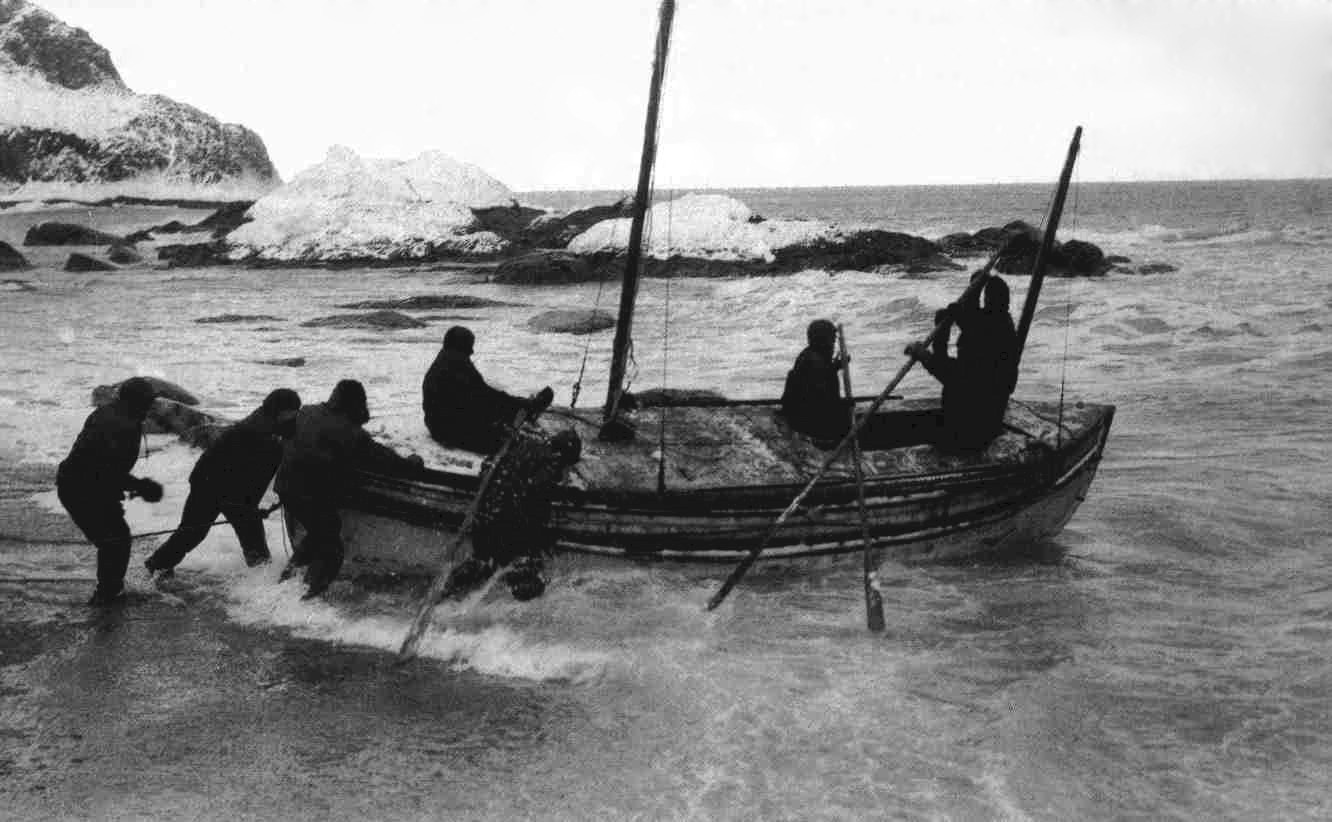
I won't spoil the whole list for you, but to give you an idea of the type of man we're talking about here, Ernest Shackleton rightly earns a spot amongst this pantheon of incredibly tough men, as does Douglas Mawson, both of whom are polar explorers of course. Others making the list include Tenzing Norgay, who was with Edmund Hillary when they both were the first to summit Everest, and  Hugh Glass, who is the subject of the new movie The Revenant starring Leonardo DiCaprio. Glass is best known for surviving  bear attack while exploring the American west, only to drag himself 200 miles over open country after he was left for dead by his companions.

Of course, there are other great examples of explorers and adventurers surviving incredibly wild experiences to come back and tell their tales. This list has six others that are certainly worthy of mentioning as well. The article is worth reading just to here a brief synopsis of each of their stories, but you'll probably eventually want to just find out more about each of them when you can.

And who did they leave off the list? As one commenter says, what about Roald Amundsen whose polar journeys are the stuff of legend. Or Thor Heyerdahl who sailed across the South Pacific on a tiny boat called Kon-Tiki? Who got snubbed, and probably should have made the cut?

10 Aralık 2015 Perşembe

New Report Indicates Glaciers on Everest Have Shrunk 28% in 40 Years

A new report has confirmed something that most of us have known for sometime. According to a new study conducted by the Chinese Academy of Science, the glaciers on Mt. Everest have shrunk by more than 28% over the past 40 years, with the majority of that shrinkage coming since the 1980's.

The report, which was released a few days back, places the blame squarely on climate change. The study indicates that Everest has been getting warmer for the past 50 years, but that increase in temperature has started to occur more rapidly in recent decades.

The glaciers that surround Everest are a major source of water throughout Asia, and as they have shrunk in size, the glacial lakes found throughout the region, as well as the rivers that they feed, have swelled. Researchers found one lake in Tibet's Mt. Everest nature preserve grew from 100 sq. km (62 sq. miles) in the 1990's, to 114 sq. km (70 sq. miles) in 2013.

As the melting continues, it could have major consequences throughout Asia. In the short term, flooding could become more of an issue, with increased erosion causing damage to the surrounding countryside, to to mention threatening villages and people living along the banks of the many streams and rivers that find their source in the more than 1400 glaciers that are found throughout the region. But in the long term, the loss of the glaciers will ultimately lead to less water, which could have dire consequences for farmers and for those who rely on power generated by hydro sources.

Another report that was released earlier in the year indicated that of the 5500 glaciers that fall across the Hindu Kush and Himalaya region, most could lose 70%-99% of their mass by the year 2100. The impact that those changes would have on the region would be devastating.

Climate change is real, its impacting our planet, and the consequences it holds for our future are frightening. It doesn't matter who or what is causing it, we need to take steps now to try to first slow its advances, and then eventually reverse its impact. That isn't going to be easy, but if we intend to leave the Earth for future generations to explore as well, it is a necessity.